A US-based SaaS company launches its platform on AWS. Everything seems secure until a misconfigured storage bucket exposes customer data. No hack, no malware, just a simple cloud misconfiguration.
This is one of the most common cybersecurity failures today. In cloud environments, security is not just about protection, it’s about clarity of responsibility and proper configuration.
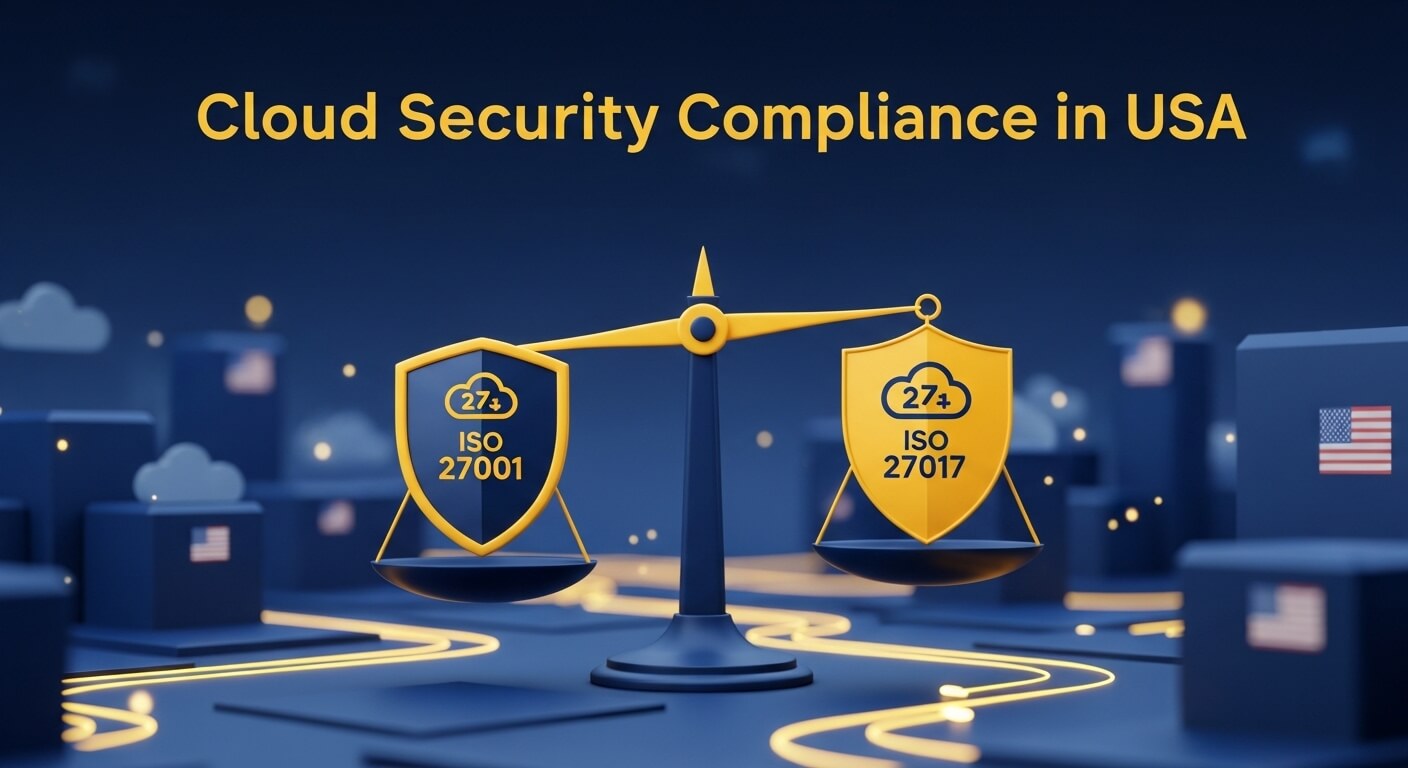
That’s where ISO 27001 and ISO 27017 come in. While both are essential, they serve different purposes. Understanding the difference can determine whether your business is truly secure or just assuming it is.
What is ISO 27001?
ISO 27001 is the global standard for Information Security Management Systems (ISMS). It provides a structured framework to manage risks across people, processes, and technology.
What it covers:
- Risk assessment and treatment
- Access control and identity management
- Data protection and encryption
- Incident response and monitoring
- Supplier and third-party security
ISO 27001 is broad and foundational, applicable to any organization regardless of industry.
What is ISO 27017?
ISO 27017 is a cloud security extension of ISO 27001, specifically designed for cloud environments.
It introduces additional controls and guidance for:
- Cloud service providers (e.g., SaaS, IaaS, PaaS companies)
- Cloud service customers (businesses using cloud platforms)
Key focus areas:
- Shared responsibility between provider and customer
- Secure configuration of cloud resources
- Data segregation in multi-tenant environments
- Virtual machine and hypervisor security
- Cloud-specific incident management
ISO 27017 addresses the real-world risks that ISO 27001 alone does not fully cover in cloud setups.
Key Differences: ISO 27001 vs ISO 27017
| Aspect |
ISO 27001 |
ISO 27017 |
| Scope |
General information security |
Cloud-specific security |
| Purpose |
Establish ISMS framework |
Enhance cloud security controls |
| Applicability |
All industries |
Cloud providers & users |
| Controls |
Broad (Annex A) |
Adds cloud-specific guidance |
| Focus |
Risk management |
Shared responsibility & cloud risks |
Simple way to understand:
ISO 27001 = Foundation
ISO 27017 = Cloud-specific enhancement
Why This Comparison Matters in the USA
- Misconfigurations are a leading cause of breaches
- Shared responsibility models are often misunderstood
- Clients demand stronger cloud security assurance
- Regulations (HIPAA, CCPA, FedRAMP) require strict data protection
Without ISO 27017:
You may be ISO 27001 certified but still exposed to cloud-specific risks.
With ISO 27017:
You demonstrate advanced cloud security maturity, especially important for SaaS and IT service providers.
When to Choose ISO 27001
ISO 27001 is ideal if:
- You are starting your security compliance journey
- Your business handles sensitive data
- You need a globally recognized certification
- You want to build a strong ISMS foundation
Typical use cases:
- SaaS startups preparing for enterprise clients
- Healthcare or fintech companies
- IT service providers managing sensitive data
When to Implement ISO 27017
ISO 27017 becomes essential if:
- You operate in cloud environments (AWS, Azure, Google Cloud)
- You provide SaaS, PaaS, or IaaS services
- You manage multi-tenant systems
- Your clients require cloud-specific compliance
Typical use cases:
- SaaS platforms handling customer data
- Cloud hosting providers
- DevOps and managed service providers
Can You Implement Both?
Yes, and in most cases, you should.
ISO 27017 is not a standalone certification. It works as an extension of ISO 27001.
Best practice approach:
- Implement ISO 27001 (ISMS foundation)
- Add ISO 27017 (cloud-specific controls)
This combined approach ensures complete coverage of both general and cloud security risks.
Implementation Approach for US Businesses
- Step 1: Define Scope: Identify systems, cloud platforms, and data
- Step 2: Conduct Risk Assessment: Include cloud-specific risks
- Step 3: Implement ISO 27001 Controls: Establish ISMS, policies, and procedures
- Step 4: Add ISO 27017 Controls: Define shared responsibilities and implement cloud security
- Step 5: Train Teams: Cloud security awareness for developers and IT staff
- Step 6: Internal Audit & Certification: Conduct audits and certification assessment
Cost Considerations
- Business size and cloud complexity
- Number of cloud platforms used
- Existing ISO 27001 maturity
- Consulting, training, and audit requirements
Implementing both standards together is often more cost-effective than doing them separately later.
Benefits for US Businesses
- Stronger Cloud Security: Reduced risk of breaches and misconfigurations
- Client Confidence: Meets expectations of enterprise and global clients
- Regulatory Alignment: Supports HIPAA, CCPA, and other frameworks
- Competitive Advantage: Stand out in SaaS and IT markets
- Operational Clarity: Clear roles in shared responsibility model
Common Mistakes to Avoid
- Assuming cloud providers handle all security
- Implementing ISO 27001 without cloud-specific controls
- Ignoring shared responsibility boundaries
- Lack of developer and DevOps training
- Treating compliance as a one-time project
Avoiding these mistakes is key to real security, not just certification.
How B-ADVANCY Certification Can Help
- Gap Analysis: Identify ISO 27001 and ISO 27017 readiness
- ISMS Implementation: Build strong security foundation
- Cloud Security Controls: Configure and secure cloud environments
- Documentation Support: Policies, procedures, and risk management
- Training Programs: Awareness for IT, DevOps, and management teams
- Audit Support: Preparation for certification audits
We help your business achieve practical, scalable, and compliant cloud security.
Take Action Today
Cloud security is no longer optional, it’s critical for growth and trust.
📩 Contact B-ADVANCY Certification:
WhatsApp:
Chat on WhatsApp
Email:
info@b-advancy.com
Get expert guidance to implement ISO 27001 and ISO 27017 effectively.
Conclusion
ISO 27001 and ISO 27017 together provide a complete cloud security framework for US businesses. While ISO 27001 builds the foundation, ISO 27017 ensures your cloud environment is truly secure.
For SaaS, IT, and cloud-driven companies, combining both standards is the smartest way to reduce risk, meet client expectations, and scale securely.
Start building your cloud security strategy today.


 Contact For Services
 Explore Training Calendar