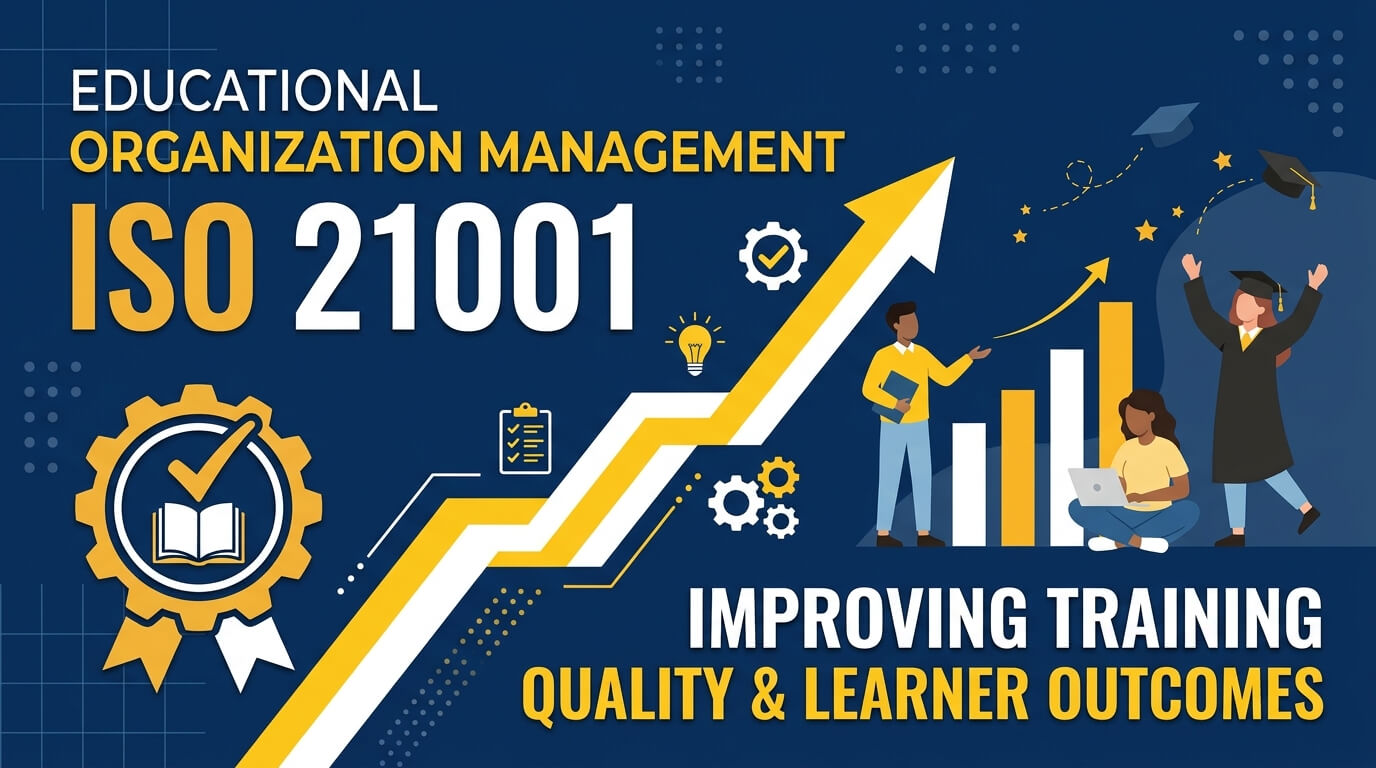
Educational institutions and professional training providers play an essential role in developing knowledge, practical skills, and professional capabilities. As learner expectations evolve and organizations demand measurable training results, education providers need effective management systems that support consistent delivery, accessibility, accountability, and continual improvement. ISO 21001, the international standard for Educational Organizations Management Systems (EOMS), provides a structured framework for managing educational processes and improving the learning experience. By implementing ISO 21001, schools, colleges, universities, vocational institutes, and corporate training providers can strengthen training quality, respond to learner needs, and evaluate educational outcomes more systematically.
ISO 21001 is particularly relevant to organizations that want to connect their educational objectives with effective management practices. Rather than focusing exclusively on administrative compliance, the standard encourages educational organizations to understand the needs of learners and other beneficiaries, establish clear responsibilities, evaluate performance, and continually improve their services. For professional training providers, this approach can help create more consistent programmes, improve instructor effectiveness, and ensure that training activities remain aligned with intended learning outcomes.
What Is ISO 21001?
ISO 21001 is a management system standard designed specifically for educational organizations. It establishes requirements for an Educational Organizations Management System (EOMS) to help organizations improve their ability to provide educational products and services that meet the needs of learners and other relevant stakeholders.
The standard applies a management system approach to educational planning, delivery, evaluation, and improvement. It helps organizations establish policies, define objectives, allocate resources, manage risks, monitor performance, and use evidence to improve their educational services.
ISO 21001 can be relevant to a wide range of organizations, including:
- Schools, colleges, and universities.
- Vocational education and technical training institutes.
- Professional development and corporate training providers.
- Online learning platforms and e-learning organizations.
- Language centres, coaching institutes, and skills development organizations.
- Organizations that provide educational or training services as a core activity.
The suitability of ISO 21001 depends on an organization's activities and the scope of its educational services. Organizations should consult the applicable standard edition and current requirements when planning implementation.
For official information, visit the International Organization for Standardization (ISO) website and search for ISO 21001.
Why ISO 21001 Matters for Educational Organizations
Educational quality involves more than delivering lessons or completing a training schedule. Organizations must understand what learners need, select appropriate teaching methods, provide suitable learning resources, assess progress, and respond to feedback. ISO 21001 offers a management framework for coordinating these activities and ensuring that improvement is part of routine operations.
1. Establishing Consistent Training Quality
Training quality can vary when instructors use different materials, assessment methods, or delivery approaches without shared expectations. This inconsistency may make it difficult to maintain the same learning experience across courses, departments, campuses, or online programmes.
An ISO 21001-based management system helps an educational organization define its objectives, establish appropriate processes, assign responsibilities, and monitor the quality of educational services. Standardized procedures can support course design, learning material development, instructor preparation, assessment, and programme review.
Consistency does not mean every course must use an identical teaching method. Instead, educational providers can establish common quality expectations while allowing instructors to select teaching approaches that suit the subject, learner group, and intended outcomes.
2. Improving Learner Outcomes
Learner outcomes refer to the knowledge, skills, competencies, and achievements learners are expected to develop through an educational programme. Training providers need suitable methods to determine whether learners are progressing toward these objectives.
ISO 21001 encourages organizations to define educational objectives and evaluate whether their services meet intended requirements. Depending on the programme, organizations may assess learning through examinations, practical demonstrations, assignments, projects, competency assessments, or other appropriate methods.
By reviewing assessment results, completion rates, learner feedback, and other relevant indicators, educational organizations can identify learning gaps and make informed adjustments to course content, teaching methods, and learner support. Actual improvements in outcomes depend on effective implementation and the suitability of the chosen interventions; a management system alone does not guarantee higher achievement.
3. Strengthening Learner Satisfaction and Engagement
Learners expect educational services to be relevant, accessible, well organized, and responsive. Unclear course requirements, delayed feedback, inadequate learning resources, or ineffective communication can negatively affect their experience.
ISO 21001 emphasizes understanding the needs of learners and other beneficiaries. Educational providers can use learner surveys, complaints, consultations, progress reviews, and feedback sessions to identify concerns and prioritize improvements.
When feedback is reviewed systematically and followed by appropriate action, organizations can improve communication, course relevance, support services, and the overall learning environment. Learner satisfaction should be evaluated alongside learning achievement and educational effectiveness rather than treated as the only measure of quality.
4. Supporting Inclusive and Accessible Education
Learners may have different educational backgrounds, abilities, language needs, learning preferences, and access to technology. Educational organizations need to consider these differences when designing programmes and delivering support.
ISO 21001 provides a framework for considering learner needs and promoting accessible, learner-centred educational services. Depending on the organization's context, improvements may include accessible learning materials, appropriate support arrangements, clearer instructions, flexible delivery options, and suitable assessment methods.
An inclusive approach helps educational organizations identify avoidable barriers and make their services more responsive to the people they serve. Specific accessibility and inclusion measures should also reflect applicable laws, regulations, and relevant educational requirements.
5. Improving Instructor and Staff Effectiveness
Teachers, trainers, assessors, administrators, and support personnel all influence the quality of educational services. Organizations need to establish clear responsibilities, determine competence requirements, and provide suitable resources for staff to perform their roles effectively.
An EOMS can support systematic staff development through competence evaluation, professional training, performance review, and knowledge sharing. Organizations may also evaluate whether instructors have the subject knowledge, practical experience, and teaching capabilities appropriate to the programmes they deliver.
Regular review of teaching practices and learner feedback can help identify where additional support or development is needed. This approach contributes to a culture in which educational staff are encouraged to improve their capabilities and share effective practices.
6. Strengthening Educational Governance and Accountability
Educational organizations manage multiple responsibilities, including curriculum planning, resource allocation, learner assessment, staff competence, stakeholder communication, and regulatory obligations. Weak coordination can create inconsistent decisions and make it difficult to demonstrate that educational objectives are being achieved.
ISO 21001 helps organizations define responsibilities, document relevant processes, evaluate risks, monitor objectives, and review management system performance. These practices can strengthen accountability and help leadership make decisions based on reliable information.
A structured system can also improve the ability to identify operational weaknesses, implement corrective actions, and monitor whether those actions have been effective. The specific governance arrangements should reflect the organization's size, educational activities, and applicable obligations.
How ISO 21001 Supports Professional Training Providers
Professional training providers operate in a competitive environment where learners and employers expect relevant content, competent trainers, practical learning experiences, and demonstrable results. ISO 21001 can help these organizations manage the full training cycle, from identifying learning needs to evaluating programme effectiveness.
A training provider implementing an EOMS may focus on the following areas:
- Training needs analysis: Identify learner requirements, employer expectations, relevant skills gaps, and programme objectives before designing a course.
- Course design and review: Establish learning objectives, course content, instructional methods, learning materials, and suitable assessment criteria.
- Trainer competence: Define trainer qualifications and experience requirements and provide continuing professional development where necessary.
- Training delivery: Manage schedules, facilities, digital platforms, participant communication, and learning resources consistently.
- Assessment and evaluation: Determine whether learners have achieved the intended knowledge or skills through appropriate assessment methods.
- Post-training review: Collect feedback and, where practical, evaluate how learners apply the acquired knowledge or skills in their work.
For example, a professional institute delivering ISO standards training can define consistent course objectives, maintain trainer competence records, use appropriate learning assessments, review participant feedback, and update course materials when requirements change. These practices can make training delivery more consistent and provide stronger evidence for evaluating effectiveness.
ISO 21001 and Continual Improvement in Education
Continual improvement is essential because learner needs, educational technologies, teaching methods, and employment requirements change over time. An educational organization should regularly assess whether its programmes remain relevant and whether its management processes continue to support effective learning.
ISO 21001 supports a systematic improvement cycle in which the organization plans its objectives, implements educational activities, evaluates results, and takes action based on findings. This can be supported by internal audits, management reviews, learner feedback, performance indicators, and corrective actions.
Examples of improvement indicators include:
- Learner achievement against defined learning objectives.
- Course completion and attendance rates.
- Learner satisfaction and complaint trends.
- Assessment consistency and the effectiveness of evaluation methods.
- Trainer competence and professional development activities.
- Timeliness of corrective actions and closure of identified issues.
- Feedback from employers, parents, partner organizations, or other relevant stakeholders, where applicable.
Organizations should select indicators that are meaningful for their educational context. For example, a vocational institute may prioritize practical competency and employment-related feedback, while an online training provider may monitor digital accessibility, participation, completion, and assessment performance. Data should be interpreted carefully and used to guide practical improvements rather than simply to produce reports.
ISO 21001 Implementation: A Practical Roadmap
Implementing ISO 21001 requires commitment from leadership and participation across the organization. A structured roadmap can help educational providers organize the work, allocate resources, and track progress.
Step 1: Understand the Organization's Context
Identify the organization's educational activities, stakeholders, internal and external issues, and applicable obligations. Define the intended scope of the Educational Organizations Management System based on the services the organization provides.
Step 2: Identify Learner and Stakeholder Needs
Determine the needs and expectations of learners and other relevant stakeholders, such as parents, employers, education authorities, partners, and staff. Consider how these requirements affect programme design, delivery, assessment, and support services.
Step 3: Conduct a Gap Assessment
Compare current educational and management practices with the requirements of the applicable ISO 21001 edition. Review leadership responsibilities, educational processes, staff competence, resource management, performance evaluation, and improvement arrangements. Record gaps and prioritize actions according to risk and importance.
Step 4: Establish and Implement the EOMS
Define the educational policy, objectives, responsibilities, operational controls, and evaluation processes required for the system. Develop documented information where needed and ensure that employees understand how the arrangements apply to their roles. Processes should support effective education rather than create unnecessary administration.
Step 5: Train Staff and Monitor Performance
Provide relevant training to instructors, administrators, and management personnel. Monitor the effectiveness of educational activities using suitable performance indicators, learner assessments, feedback, and internal reviews. Address identified issues and maintain evidence of implementation.
Step 6: Conduct Internal Audits and Management Reviews
Internal audits help determine whether the management system meets applicable requirements and is effectively implemented. Management reviews allow leadership to evaluate performance, resource needs, risks, stakeholder feedback, and improvement opportunities. Identified issues should be addressed through appropriate corrective actions.
Step 7: Consider Certification
After the EOMS has been implemented and evaluated, the organization may consider an independent certification audit. The audit assesses the management system against the applicable requirements within the agreed scope. Certification is subject to the audit outcome and the certification body's decision; it should not be assumed or guaranteed in advance.
ISO 21001 Certification: What Educational Organizations Should Know
ISO 21001 certification provides independent evidence that an educational organization's management system has been assessed against the applicable standard requirements within a defined scope. It can help the organization communicate its commitment to structured educational management, learner-focused services, and continual improvement.
However, ISO 21001 certification should not be confused with institutional accreditation, government approval, professional licensing, or a guarantee of academic results. These processes have different purposes and may be governed by separate authorities and requirements. Educational organizations should identify which approvals and credentials are relevant to their activities and ensure they meet all applicable obligations.
Before selecting a certification provider, organizations should evaluate its accreditation status where relevant, competence, audit arrangements, scope, costs, and certification process. They should also verify the applicable edition of ISO 21001 and any transition arrangements announced by ISO or the relevant certification body.
Common Challenges in ISO 21001 Implementation
Educational organizations may face practical challenges when introducing a formal management system. Identifying these issues early can help management plan realistic actions and maintain staff engagement.
- Resistance to change: Staff may be unfamiliar with formalized processes. Clear communication, consultation, and relevant training can help employees understand the purpose of the system.
- Limited resources: Smaller educational providers may have limited budgets or administrative capacity. A phased implementation plan can help prioritize the most important activities.
- Inconsistent assessment methods: Different approaches to evaluating learners may make results difficult to compare. Suitable assessment criteria and review arrangements can improve consistency.
- Insufficient performance data: Organizations may lack reliable information about learner progress or programme effectiveness. Establishing appropriate data collection and review methods can support evidence-based decisions.
- Documentation without practical value: Excessive paperwork can distract staff from teaching and learning. Document only what is needed to operate, control, and evaluate the management system effectively.
- Weak follow-up on feedback: Collecting learner opinions without taking action limits their value. Assign responsibility for reviewing feedback, prioritizing issues, and monitoring improvements.
How B-ADVANCY Can Support Educational Organizations
B-ADVANCY is a global certification and sustainable business assurance provider offering management system certification, audits and inspections, consulting, calibration and testing, and professional training. Educational institutions and training providers seeking to improve their management practices can explore support that aligns with their organizational context, learner needs, and quality objectives.
An ISO 21001 implementation journey may involve reviewing existing processes, identifying gaps, defining educational objectives, improving staff competence, establishing performance indicators, and preparing for an independent certification audit. The appropriate scope and support depend on the organization's activities, resources, and readiness.
Educational organizations should confirm the relevant standard edition, applicable certification requirements, and the competence and authorization of any provider engaged for certification-related services. Certification decisions must be based on the applicable audit process and objective evidence.
To explore available services, visit the official B-ADVANCY website or contact the organization to discuss your educational management system objectives.
Conclusion
ISO 21001 provides educational organizations with a structured approach to managing educational services, understanding learner needs, evaluating performance, and driving continual improvement. By implementing an Educational Organizations Management System, schools, universities, vocational institutes, and professional training providers can strengthen process consistency, support instructor competence, improve feedback management, and evaluate learner outcomes more systematically.
Successful implementation depends on leadership commitment, staff engagement, relevant performance measures, and a focus on practical improvements. ISO 21001 certification can provide independent evidence of conformity with the applicable management system requirements, but meaningful educational progress requires ongoing attention to teaching quality, learner development, and programme effectiveness.
For educational institutions and training providers seeking to strengthen their quality management practices, ISO 21001 can be a valuable framework for building a more responsive, accountable, and continually improving learning environment.
 Contact For Services
 Explore Training Calendar