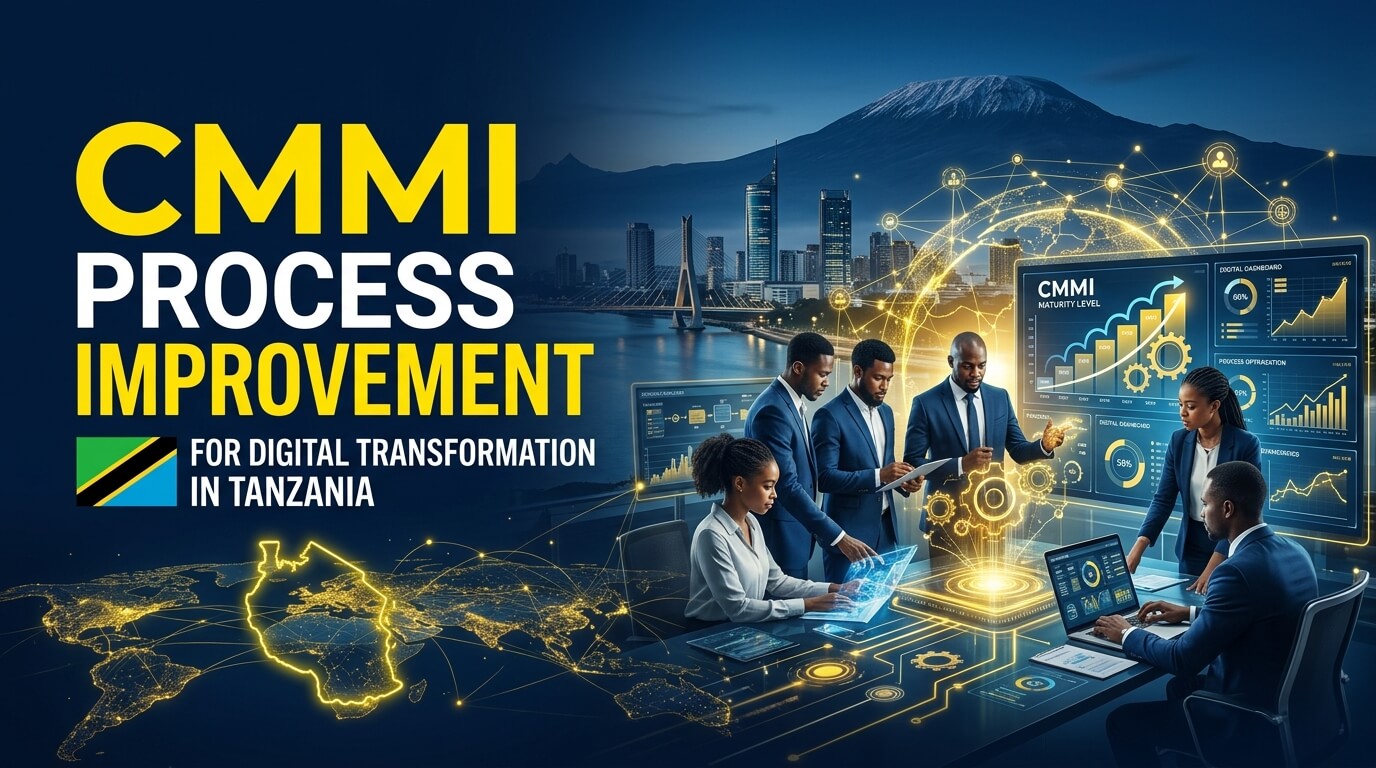
Digital transformation is changing how organizations deliver services, manage information, engage customers, and operate their businesses. In Tanzania, digital initiatives across public services, financial services, telecommunications, education, healthcare, logistics, and enterprise technology create opportunities to improve efficiency and accessibility. However, successful digital transformation requires more than introducing new software or migrating existing systems to modern platforms. Organizations also need reliable processes, clear governance, effective risk management, and measurable performance objectives.
Capability Maturity Model Integration (CMMI) offers a structured approach to evaluating and improving organizational processes and performance. When aligned with business objectives, CMMI-based process improvement can help organizations manage digital transformation projects more consistently, strengthen project execution, improve software and service quality, and identify opportunities for continuous improvement.
For organizations undertaking digital transformation projects in Tanzania, CMMI can provide a practical foundation for improving the way projects are planned, developed, implemented, monitored, and maintained. This article explores how CMMI-based improvement works, its potential benefits, the processes organizations should evaluate, and the steps involved in preparing for a structured improvement initiative.
Understanding CMMI Process Improvement
CMMI is a performance and process improvement framework that helps organizations assess their existing practices, identify weaknesses, and establish more consistent ways of working. It can be applied in different organizational environments, including software development, service delivery, supplier management, and other business activities covered by the applicable CMMI model and domain.
Rather than concentrating only on individual project results, CMMI-based improvement encourages organizations to examine the processes behind those results. For example, a digital project may be delivered on time, but the organization may still experience inconsistent requirements management, undocumented changes, repeated defects, or difficulties transferring the solution to operational teams. These issues can become more significant as the organization manages additional projects.
A structured improvement initiative helps organizations understand why these problems occur and determine which practices need to change. The objective is to establish repeatable processes that support better planning, execution, monitoring, and learning across projects.
According to the CMMI Institute's appraisal guidance, appraisals can help organizations identify process strengths and weaknesses, prioritize improvement efforts, address risks, and understand how their processes compare with applicable CMMI practices.
Digital Transformation in Tanzania: Why Process Maturity Matters
Digital transformation involves changes to technology, workflows, information management, customer experiences, and organizational responsibilities. A project may include developing a digital platform, integrating enterprise applications, automating manual processes, introducing cloud services, implementing electronic records, or modernizing an existing information system.
Tanzania's Information and Communication Technologies Commission identifies digital infrastructure, governance, and an enabling environment among the pillars of its digital economy strategy. These priorities illustrate the importance of coordinating technology adoption with institutional capability, skills, and effective implementation practices.
For individual organizations, the challenge is turning digital investment into dependable business results. A new system may not deliver its expected value if requirements are unclear, stakeholders are not involved, teams lack appropriate skills, or the solution is difficult to maintain. Process maturity helps address these challenges by establishing clearer responsibilities, better controls, and more reliable feedback throughout the project lifecycle.
CMMI-based process improvement can be relevant to Tanzanian organizations such as:
- Software development companies building digital products, mobile applications, and enterprise platforms.
- IT service providers delivering systems integration, technical support, and managed services.
- Financial service organizations implementing digital banking, payment, and customer service solutions.
- Public sector organizations modernizing administrative systems and electronic service delivery.
- Telecommunications and infrastructure companies introducing new digital platforms and operational technologies.
- Healthcare, education, logistics, and other organizations investing in digital operations.
The most suitable approach depends on each organization's project portfolio, operational needs, customer expectations, and applicable regulatory obligations. CMMI should support these priorities rather than become a separate administrative exercise.
Key Areas of CMMI Process Improvement for Digital Projects
1. Project Planning and Governance
Digital transformation projects often involve multiple departments, technology vendors, business stakeholders, and external service providers. Without clear governance, responsibilities may overlap, decisions may be delayed, and project teams may struggle to manage changing priorities.
Process improvement helps establish defined project responsibilities, planning procedures, milestones, resource estimates, approval arrangements, and reporting practices. Organizations can also define escalation routes for significant risks and delivery issues. These measures help managers identify problems earlier and make decisions based on consistent information.
2. Requirements Development and Management
Unclear or frequently changing requirements are common sources of project delays, rework, and disagreement. Digital transformation initiatives must often translate business needs into technical requirements while considering usability, security, performance, integration, and maintenance.
A structured requirements process helps teams document stakeholder needs, confirm acceptance criteria, evaluate proposed changes, and maintain traceability between requirements, design, development, and testing. These practices are particularly useful when several departments or vendors contribute to a single digital solution.
3. Software Quality Assurance and Testing
A digital solution must perform reliably under its intended operating conditions. Defects, integration failures, and inadequate testing can undermine customer confidence and increase the cost of maintaining the system after deployment.
Organizations can improve quality by defining testing responsibilities, reviewing deliverables, recording defects, monitoring corrective actions, and evaluating whether established quality requirements have been met. Testing should be planned throughout the development lifecycle instead of being treated as a final activity immediately before launch.
4. Risk and Issue Management
Digital transformation projects may encounter budget constraints, resource shortages, vendor dependencies, cybersecurity concerns, integration problems, data quality issues, or delays in stakeholder decisions. If these risks are not monitored systematically, they may become difficult and expensive to resolve.
A risk management process helps teams identify potential problems, assess their likelihood and impact, assign owners, plan responses, and review risk status throughout the project. Organizations should also document actual issues, track corrective actions, and evaluate whether their responses are effective.
5. Configuration and Change Management
Digital projects can involve frequent changes to source code, system settings, technical documentation, interfaces, and deployment environments. Poor change control may result in incompatible versions, undocumented modifications, or unexpected service disruptions.
Organizations can strengthen configuration management by identifying important project assets, controlling versions, recording approvals, and defining how changes are reviewed and tested. A reliable change process also helps teams understand the effect of modifications on cost, schedule, quality, and operational risk.
6. Supplier and Vendor Management
Many digital transformation projects depend on external software developers, cloud providers, implementation partners, consultants, or technology suppliers. If expectations and responsibilities are not clearly defined, organizations may experience delivery gaps, inconsistent quality, or disputes over project requirements.
Supplier management improvement can include defining contractual deliverables, setting acceptance criteria, monitoring vendor performance, reviewing risks, and documenting the resolution of delivery problems. These practices help organizations manage external dependencies while retaining appropriate oversight of project outcomes.
7. Performance Measurement and Continuous Improvement
Organizations need reliable data to determine whether digital transformation projects are delivering the intended results. Tracking only budget and schedule may not reveal recurring defects, inefficient workflows, low user adoption, or growing maintenance demands.
Useful performance indicators may include defect rates, requirements volatility, delivery predictability, rework effort, unresolved risks, customer satisfaction, and system adoption. The selected measures should reflect the project's objectives and should be reviewed consistently to identify trends and guide improvement decisions.
Benefits of CMMI Process Improvement for Tanzanian Organizations
CMMI-based process improvement can help organizations establish a more disciplined approach to delivering digital projects. The actual results depend on the quality of implementation, leadership support, employee engagement, and alignment between process changes and business goals.
- Greater project predictability: Consistent planning, monitoring, and risk management can help teams identify deviations and respond more effectively.
- Improved software and service quality: Defined verification, validation, and quality practices help teams identify defects and manage corrective actions.
- Reduced avoidable rework: Better requirements management and change control can reduce misunderstandings and repeated work.
- Stronger project governance: Clear responsibilities, reporting, and decision-making arrangements improve management visibility.
- More effective supplier oversight: Defined expectations and performance reviews help manage third-party contributions.
- Improved organizational learning: Lessons learned and performance data can inform future digital projects.
- Greater customer confidence: Consistent delivery practices and documented evidence can help demonstrate a disciplined approach to project execution.
These benefits are potential outcomes, not automatic guarantees. Organizations should establish a baseline, select relevant indicators, and evaluate whether process improvements lead to measurable business results.
How to Implement CMMI Process Improvement for Digital Transformation Projects
Step 1: Define Business Objectives
Begin by identifying the problems the organization wants to solve. Objectives may include improving delivery predictability, reducing rework, strengthening project governance, improving software quality, or managing supplier performance. Clear objectives help ensure that process improvement addresses genuine business needs.
Step 2: Assess Existing Processes
Review the organization's existing project management, engineering, quality assurance, risk management, configuration management, and supplier management practices. Examine how work is performed in actual projects, not only how procedures describe it. Identify recurring problems, inconsistent practices, unclear responsibilities, and gaps in performance measurement.
Step 3: Select the Appropriate CMMI Model and Scope
The appropriate CMMI model and domain depend on the organization's activities and improvement goals. A software development organization may require a different focus from a service provider or a business managing a complex supplier network. Confirm the applicable model version, organizational unit, project scope, and any customer-specific requirements before creating the improvement roadmap.
Step 4: Build an Improvement Roadmap
Prioritize gaps according to business impact, risk, urgency, and available resources. Define process owners, implementation milestones, required training, supporting tools, and success measures. A phased roadmap is often more practical than attempting to change every process at the same time.
Step 5: Train Teams and Apply the Processes
Project managers, developers, testers, quality personnel, and senior leaders should understand the new procedures and their individual responsibilities. Apply the updated processes to real projects, gather feedback, and make adjustments where procedures are unclear or unnecessarily complex.
Step 6: Measure Performance and Review Evidence
Track relevant performance indicators and maintain records that demonstrate how processes are implemented. Project plans, review records, test results, risk registers, change histories, and corrective action records may provide useful evidence, depending on the applicable requirements. Management should review trends and confirm whether the improvement activities are producing the expected results.
Step 7: Conduct a Readiness Review or Formal Appraisal
An internal readiness review can identify remaining gaps and help the organization prepare for a formal appraisal. Organizations pursuing an official CMMI appraisal should understand the differences between appraisal types and engage an appropriately qualified CMMI Certified Lead Appraiser through the applicable authorized arrangement. The official CMMI appraisal types guidance explains the purposes of Benchmark, Sustainment, Evaluation, and Action Plan Reappraisal activities. A readiness review does not guarantee a particular appraisal outcome.
Common Challenges and How to Address Them
Resistance to new processes: Employees may consider process improvement an additional administrative burden. Explain the business reasons for the changes and involve project teams in designing workflows that support daily work.
Limited resources: Smaller organizations may have restricted budgets, limited specialist skills, or competing project deadlines. Prioritize the most significant gaps and implement changes in manageable phases.
Inconsistent documentation: Project information may be stored in different systems or maintained differently by individual teams. Establish clear record ownership, common templates where appropriate, and practical document control procedures.
Unclear performance indicators: Collecting large amounts of data does not necessarily lead to better decisions. Select a manageable set of indicators that directly relate to project objectives and review them at defined intervals.
Focusing only on appraisal results: An appraisal should not be the sole reason for improving processes. Management should continue to evaluate performance, address weaknesses, and maintain effective practices after the appraisal activity is complete.
Choosing CMMI Consulting and Process Improvement Support in Tanzania
Organizations may benefit from professional support when they need help assessing current practices, identifying process gaps, developing an improvement roadmap, training employees, or preparing for an appraisal. A suitable engagement should be tailored to the organization's size, technology environment, project portfolio, and business objectives.
Before selecting a provider, review its experience with relevant process improvement activities, the qualifications of its personnel, the clarity of its proposed deliverables, and its approach to transferring knowledge to internal teams. If a formal appraisal is planned, independently verify the Lead Appraiser's current qualifications and the applicable authorization arrangements. Consulting and preparation support should not be represented as a guarantee of achieving a particular maturity or capability level.
B-ADVANCY provides consulting, professional training, management system-related services, and business improvement support. Organizations in Tanzania exploring CMMI-related process improvement can discuss their digital transformation objectives, current process challenges, and improvement priorities to determine a suitable approach. The scope of any engagement, including formal appraisal delivery, should be confirmed before work begins.
Conclusion
CMMI process improvement can provide a structured approach for organizations in Tanzania seeking to strengthen their digital transformation projects. By improving project planning, requirements management, quality assurance, risk control, configuration management, supplier oversight, and performance measurement, organizations can establish more consistent processes and make better-informed decisions.
The most effective improvement initiatives connect process changes directly to business goals. They involve leadership, engage employees, use objective performance data, and focus on practical implementation rather than documentation alone. With a clearly defined roadmap and appropriate expertise, organizations can build stronger foundations for delivering and sustaining digital solutions.
Contact B-ADVANCY Today for Support
Are you planning a digital transformation project or looking to improve your organization's project management and process performance? Contact B-ADVANCY to discuss your requirements and explore suitable consulting and professional training support.
📞 WhatsApp:Chat on WhatsApp📧 Email:info@b-advancy.com


 Contact For Services
 Explore Training Calendar